Loop or Out-and-Back: Choosing a Route Shape
Choose a loop or out-and-back running route that fits your energy, scenery preferences, and finish point, so you can plan a run that feels manageable.
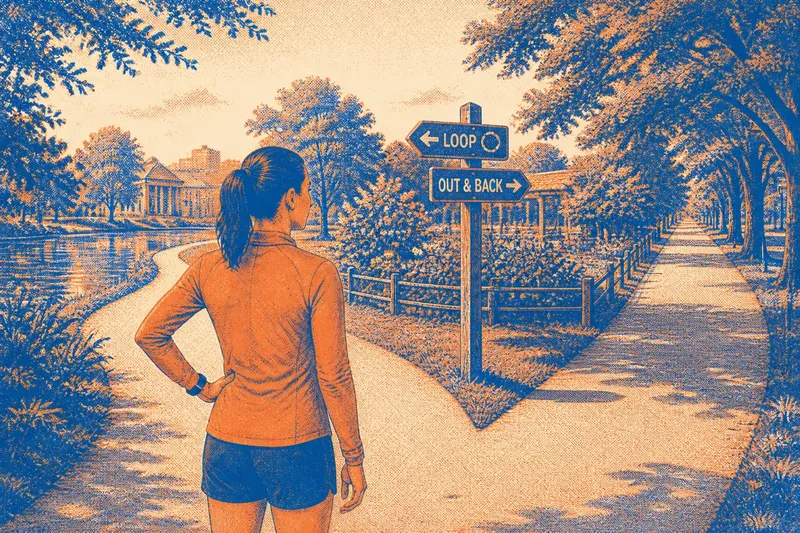
A loop or out-and-back running route can shape how a run feels, even when both use familiar paths. Choose a loop for changing scenery and a return to your starting point; choose an out-and-back when you want to turn at a chosen point and retrace a known stretch. The right fit depends less on the map’s outline than on what you want from the run.
Scenery and repetition
A loop moves through different surroundings on the way back. That can help the run feel varied, especially if repeated views make a route seem longer. Look for a circuit that passes places you enjoy, such as a shaded path, a neighborhood garden, or a public park’s open field.
An out-and-back gives you a second view of the same places. Some runners like that repetition because it makes the route feel familiar; others would rather see something new. If you choose this shape, think about whether the return scenery will feel calming or monotonous on a day when you are tired.
Say you want an easy run after work and have two options: a loop past a community garden and a pond, or an out-and-back along a tree-lined path. If changing scenery helps you stay engaged, the loop may suit you; if a familiar route sounds more relaxing, the out-and-back may fit better. The expected tradeoff is variety versus repetition, not one universally better route.
Effort and pacing
An out-and-back has a natural point to reassess: when you turn around. You can adjust your effort there rather than committing to a full circuit. Pick a turnaround that gives you room to pause safely, such as a wide path junction or a public plaza, rather than a narrow bridge or busy crossing.
A loop can make it easier to keep a steady, relaxed effort because you continue forward rather than returning over the same ground. But if you are unsure how much energy to leave for the finish, check the route’s hills and surface before you start. A loop that climbs near the end may feel harder than one with a gentler final stretch.
For either shape, use effort cues instead of trying to force a pace that does not match the day. If you can speak in short sentences and your breathing feels controlled, you are likely keeping the run conversational. Slow down or walk if the effort rises beyond what you intended.
Start and finish
A loop usually brings you back near the starting point, which works well when you begin at home, a park entrance, or a transit stop. Check the actual gate or trail access point: a large park can have several entrances, and a route may finish far from the one you used.
An out-and-back normally ends where it began. That is convenient if you need to return to a car, bike, or transit stop. If you want to finish somewhere else, consider a point-to-point route instead and decide how you will get home before setting out.
Some routes combine both shapes. You might follow a path out to a junction, complete a small loop, then retrace the opening section. Check the junction beforehand so you know how the route reconnects and which way leads back to your starting point.
Changing the plan
An out-and-back makes an early return simple: turn around at a suitable place and head back along the route you know. That can be useful if your energy drops or the weather changes. Choose a safe place to turn, and follow posted closures rather than trying to pass a barrier.
A loop can also offer options if it connects with other paths. Before heading out, check a local park or city trail map for public connectors and open exits. If there is no clear shorter way back, treat the circuit as a commitment and choose a route that suits how you feel that day.
Use this quick decision list before you leave:
- Check whether varied scenery sounds appealing today; if it does, choose a loop with recognizable surroundings, but if repetition feels preferable, choose an out-and-back.
- Check whether the out-and-back has a safe, roomy turnaround; if it does, use that point, but if it does not, choose a different turnaround or a loop.
- Check whether the loop has clear, public paths; if it does, use the circuit, but if access or turns are uncertain, choose a simpler route.
- Check where the route ends; if it returns to the place you need, keep it, but if not, choose another shape or arrange a ride from the finish.
- Check whether you want the option to shorten the run; if the out-and-back allows a comfortable early turn, use it, but if not, choose a route with an open connector or a shorter circuit.
- Check for posted closures or difficult crossings; if the route is open and crossings feel manageable, proceed, but if not, select a marked alternative.
Which route shape fits?
Choose an out-and-back if you value a familiar return, a clear point to turn, or the option to head back early. Choose a loop if changing scenery sounds better and you want to finish near your starting point. If neither shape fits your destination, a point-to-point route may be the more practical choice.
Imagine you have an invented plan to run from a library to a neighborhood park and back. The available loop returns to the library but has several turns; the out-and-back follows a straight public path with a broad turnaround beside a community garden. First, you decide that a familiar finish matters more than changing scenery. Next, you check the path’s public access and choose the garden as the turnaround. Then you set out knowing you can turn back early if your effort feels higher than expected. The result is a route with a simple return and a clear option to shorten the outing; the tradeoff is seeing the same path twice.
Which shape suits your run?
Does a loop make a run feel less repetitive?
Often, because the route presents different surroundings on the return. If a loop adds more turns than you want to manage, choose a simpler circuit or an out-and-back with scenery you enjoy.
Can an out-and-back help me control effort?
It gives you a natural point to reassess at the turnaround and head back if you want to shorten the outing. Choose a safe place to pause or turn, and ease your pace if the run feels harder than planned.
When should I choose a point-to-point route?
Choose one when your intended finish is somewhere other than your starting point, such as a transit stop or a friend’s meeting place. Plan how you will get home and check that the finish is accessible before you leave.
Can I combine a loop and an out-and-back?
Yes. You can follow a path out to a junction, complete a loop, and retrace the opening section; check the connection in advance so the route remains clear.
For a loop or out-and-back running route, decide what matters most today: varied scenery, a familiar return, a flexible turnaround, or a particular finish point. Check that the route matches that priority and that its public paths are open. A small choice made before you leave can spare you from changing the plan when you are already tired.